Deye Three-Phase Low-Voltage Hybrid Inverter Setup Guide
Updated 6 September 2026 · By SolarNevs Research Desk, Dealer surveys + verified sources · 1 source · Method ↗
Key Takeaways
- Deye SG04LP3-EU inverters are designed for three-phase low-voltage (48V) hybrid systems.
- They support parallel connection of up to 16 units for expanded capacity.
- These inverters can handle up to 100% unbalanced AC power output per phase.
- Heavy-gauge DC battery cables, typically 50mm² to 70mm², are essential for safe operation.
Setting Up Your Deye Three-Phase Low-Voltage Hybrid Inverter
This guide details the setup and commissioning process for Deye SUN-8K / 10K / 12K-SG04LP3-EU three-phase low-voltage (48V) hybrid inverters. These inverters combine three-phase AC output with safe low-voltage battery storage interfacing, making them suitable for both residential and commercial off-grid and grid-parallel energy storage systems.
Understanding the Deye SG04LP3 Architecture
The Deye SG04LP3 series is engineered to provide robust power solutions with flexibility for various load conditions. A key feature is its ability to deliver up to 100% unbalanced AC power output per phase, which supports asymmetric household and commercial loads without requiring complex load balancing.
These inverters are compatible with standard single-phase and three-phase electrical distribution systems globally. For larger installations, the system supports parallel connection of up to 16 hybrid inverter units for scalable on-grid and off-grid capacity.
Parameter / Feature | Deye SG04LP3 Specification |
|---|---|
Series Models | SUN-8K-SG04LP3-EU, SUN-10K-SG04LP3-EU, SUN-12K-SG04LP3-EU |
Battery Architecture | 48V low-voltage DC |
Recommended DC Cable Sizing | 50mm² to 70mm² |
Max Parallel Units | Up to 16 hybrid inverter units |
Phase Load Handling | Up to 100% unbalanced AC output per phase |
Primary Commissioning | Integrated color touchscreen LCD |
Safety Disconnect Wait Time | Minimum 5 minutes for capacitor discharge |
Essential Wiring and Safety Procedures
Proper wiring and safety protocols are critical during the installation of your Deye inverter. Always ensure that all work is carried out by an accredited installer.
DC Battery Connection
Due to the high discharge currents in Deye 48V three-phase systems, heavy-gauge DC battery cables are required. These cables are typically 50mm² to 70mm². Ensure all connections are secure and correctly polarised.
BMS Communication
Connect the master battery BMS CAN communication cable to the dedicated BMS port on the inverter. This enables the inverter to communicate with and manage the battery system effectively.
Earthing
Bond the inverter chassis ground and any metal battery enclosure to the main installation earthing terminal. This protective enclosure earth bonding is vital for safety.
Safe DC Battery Disconnect
Before performing any maintenance or disconnection, switch off the DC battery isolator and wait at least 5 minutes for internal capacitors to discharge. This prevents electrical shock and equipment damage.
Commissioning and Configuration
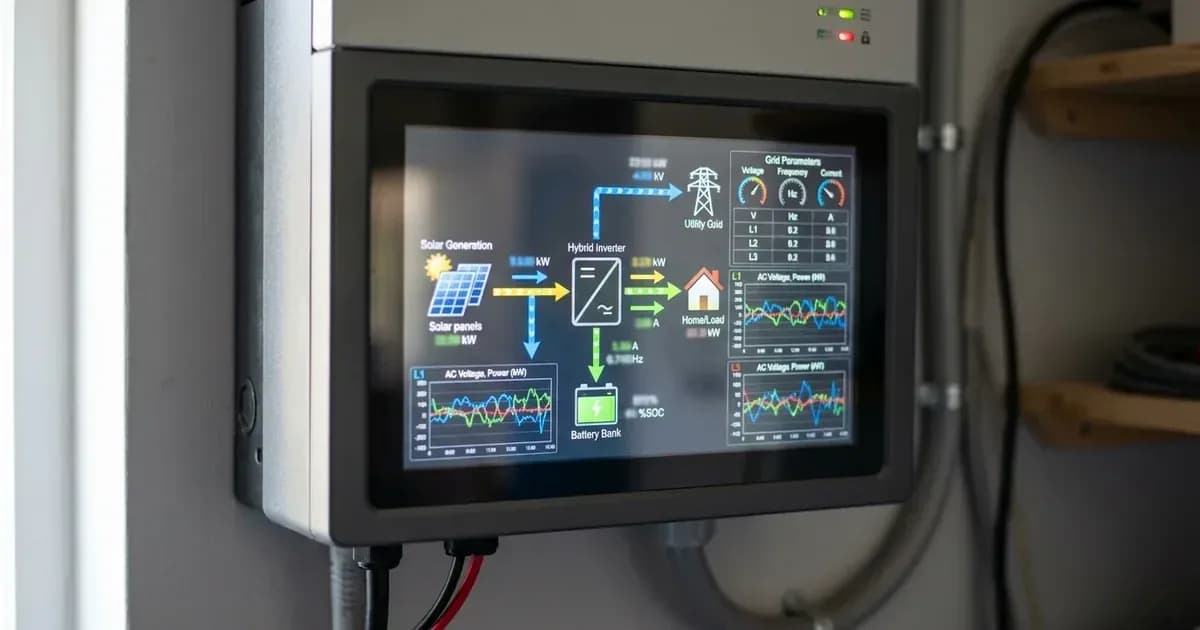
The Deye SG04LP3 inverters offer flexible commissioning options. Commissioning, operating modes, and battery parameters can be programmed directly via the color touchscreen on the unit. Additionally, the Solarman App provides another interface for configuration.
Touchscreen Interface
The integrated touchscreen LCD allows for on-site commissioning. This includes setting grid parameters, operating modes (e.g., self-consumption, time-of-use), and specific battery charging and discharging parameters.
Remote Management
For ongoing monitoring and management, the system supports remote firmware and configuration management via a VRM cloud portal. This allows for diagnostics and updates without requiring a site visit.
Grid Protection and Compliance
The Deye SG04LP3 inverters are designed to comply with international microgeneration safety and grid protection standards. This includes certified anti-islanding protection, which ensures the inverter safely disconnects from the grid during power outages to protect utility workers.
What you can check yourself, and what you cannot
As a homeowner, you can safely monitor the inverter's status and performance via the touchscreen display or the Solarman App. You can also check for clear fault codes displayed on the screen.
However, any physical wiring, internal adjustments, or changes to grid-protection settings must only be performed by an accredited installer. Opening the inverter enclosure, replacing components, or altering critical electrical connections can be hazardous and may void your warranty or breach your connection agreement with the network operator. Always isolate PV, battery, and AC breakers, and wait the manual's capacitor-discharge time before an authorised service technician opens the unit.
What the published sources do not tell you
While the Deye SG04LP3 series supports parallel stacking, specific network operator requirements for multi-inverter installations can vary significantly. These requirements are often not detailed in general product specifications and may involve additional approvals or specific protection devices. Furthermore, while the inverter supports 100% unbalanced output, the practical implications for your specific grid connection and household wiring should be assessed by a qualified electrician to ensure compatibility and safety. Official scheme guidelines does not specify the CAN BMS pinout configuration, which is crucial for battery communication and typically found in the detailed installation manual.
Still showing the fault? Book a technician
If the steps above did not clear it, tell us the inverter or battery and the exact code. We pass it to a technician who covers your city; visit charges are quoted before they come.
How this pays for the site: the technician or verifier pays SolarNevs a fixed introduction fee. Nobody pays to be recommended, and you are free to use our free guides instead.
Frequently asked questions
What Deye inverter models does this guide cover?
This guide covers the Deye SUN-8K / 10K / 12K-SG04LP3-EU three-phase low-voltage (48V) hybrid inverters.
Can Deye SG04LP3 inverters operate with unbalanced loads?
Yes, the Deye SG04LP3 inverters deliver up to 100% unbalanced AC power output per phase, supporting asymmetric household and commercial loads.
How many Deye hybrid inverters can be connected in parallel?
The Deye SG04LP3 series supports parallel connection of up to 16 hybrid inverter units for scalable on-grid and off-grid capacity.
What size DC battery cables are needed for Deye 48V three-phase systems?
In Deye 48V three-phase systems, heavy-gauge DC battery cables, typically 50mm² to 70mm², are required due to high discharge currents.
How do I safely disconnect the battery from a Deye inverter?
To safely disconnect the battery, switch off the DC battery isolator and wait at least 5 minutes for internal capacitors to discharge.
References
- Deye SUN 5-12K-SG04LP3-EU Hybrid Inverter User Manual — accessed 27 August 2026
Related guides
More from inverter errors & fixes.