Hoymiles Hms And Hmt Series Microinverter Setup Guide
Updated 15 September 2026 · By SolarNevs Research Desk, Dealer surveys + verified sources · 4 sources · Method ↗
Key Takeaways
- Hoymiles HMS (single-phase, up to two-kilowatt) and HMT (three-phase, up to two-point-two-five-kilowatt) microinverters require specific installation procedures.
- All wiring must use certified trunk cables and IP68 watertight connectors.
- High-voltage DC, AC grid interconnection, and switchgear modifications require certified, licensed personnel.
- Grid protection settings must always match regional distribution network operator codes in Great Britain.
How to set up your Hoymiles HMS or HMT microinverter in Great Britain
Setting up Hoymiles HMS (single-phase, up to two-kilowatt) and HMT (three-phase, up to two-point-two-five-kilowatt) series microinverters involves careful attention to wiring, communication, and grid compliance. This guide outlines the essential steps and requirements for a safe and compliant installation in Great Britain.
The installation of microinverters must comply with manufacturer guidelines and local regulations. This ensures the system operates safely, efficiently, and in accordance with the electricity network rules.
What is actually going on: Microinverter operation and communication
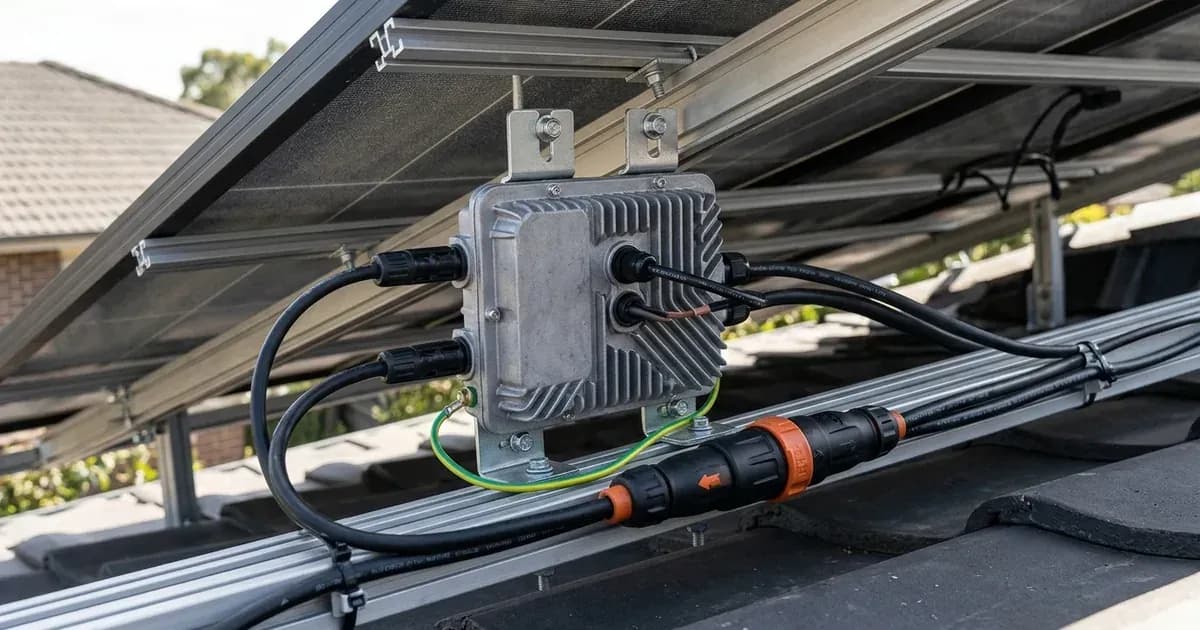
Hoymiles HMS and HMT series microinverters convert direct current (DC) from individual solar panels into alternating current (AC) suitable for your home and the grid. Each microinverter features Module Level Maximum Power Point Tracking (MPPT), which optimises the power output of each solar panel independently. This means if one panel is shaded or underperforming, it does not reduce the output of other panels in the array. These microinverters also comply with rapid shutdown requirements, enhancing safety by quickly de-energising the solar array when needed.
For monitoring and control, Hoymiles microinverters use sub-1G wireless communication. This low-frequency wireless signal connects the microinverters to a DTU (Data Transfer Unit) gateway. The DTU collects performance data from each microinverter and sends it to a monitoring platform, allowing you to track your system's energy production.
Key installation requirements for Hoymiles microinverters
The installation of Hoymiles HMS and HMT microinverters requires adherence to specific technical and safety standards. These requirements ensure the system's longevity, safety, and compliance with national electricity regulations.
Requirement Category | Detail | Action |
|---|---|---|
Manufacturer Guidelines | "Microinverter installations must comply with manufacturer guidelines." | Always refer to the specific installation manual for your HMS or HMT model. |
Wiring | "Wiring must use certified trunk cables and IP68 watertight connectors." | Use only approved trunk cables and ensure all connections are securely sealed against water ingress. |
Grid Protection | "Grid protection settings must match regional distribution codes." | Configure the microinverter's grid protection settings to align with the specific requirements of your Distribution Network Operator (grid operator) in Great Britain. |
Personnel | High-voltage DC, AC grid interconnection, and switchgear modifications. | These tasks must be performed by certified, licensed personnel only. |
What you can check yourself, and what you cannot
As a homeowner, you can perform visual checks and monitor your system's performance through the DTU gateway. You can check for obvious physical damage to panels or cables and ensure the DTU is powered on and communicating.
However, certain tasks are strictly for certified professionals due to the inherent risks involved with high-voltage electricity and the need for compliance with specific electrical codes.
What you can check:
- Visual inspection: Look for any visible damage to solar panels, microinverters, or exposed cabling.
- DTU status: Verify that your DTU gateway is powered on and showing an active connection to the microinverters and the internet.
- Monitoring data: Use the Hoymiles monitoring platform to check your system's energy production and identify any obvious performance drops.
What you cannot do yourself:
- High-voltage DC wiring: Do not attempt to connect or disconnect DC cables from solar panels or microinverters. This involves high-voltage direct current.
- AC grid interconnection: Do not connect the microinverter's AC output to your home's electrical supply or the grid. This requires specific electrical knowledge and licensing.
- Switchgear modifications: Do not modify your main distribution board (fuse box) or any other electrical switchgear.
- Changing grid protection settings: Do not attempt to alter the microinverter's grid protection settings. These settings are critical for grid stability and safety and must be configured by a qualified installer according to regional distribution codes.
- Opening the microinverter enclosure: Opening the microinverter can expose you to hazardous voltages and voids the warranty.
Any work involving high-voltage DC, AC grid interconnection, or switchgear modifications must be performed by certified, licensed personnel to ensure safety and compliance with electrical regulations in Great Britain.
What the published sources do not tell you
official documentation provides foundational requirements but does not detail the specific regional distribution codes for grid protection settings across Great Britain. These codes can vary slightly depending on your local Distribution Network Operator (grid operator). Installers must consult the specific grid operator requirements for your area.
Additionally, while official technical guidance mentions "certified trunk cables and IP68 watertight connectors," it does not specify particular brands or models of these components. The choice of specific cabling and connectors will depend on the installer's preference, product availability, and compliance with relevant British Standards.
official documentation also does not provide a troubleshooting guide for common issues that may arise with sub-1G wireless communication or microinverter performance. Such details are typically found in the full manufacturer's installation and user manuals, which installers and homeowners should consult for operational specifics.
Still showing the fault? Book a technician
If the steps above did not clear it, tell us the inverter or battery and the exact code. We pass it to a technician who covers your city; visit charges are quoted before they come.
How this pays for the site: the technician or verifier pays SolarNevs a fixed introduction fee. Nobody pays to be recommended, and you are free to use our free guides instead.
Frequently asked questions
What are the primary technical requirements for hoymiles hms and hmt series microinverter setup guide?
Key requirements include compliance with local grid codes, correct equipment certification, and proper electrical isolation.
Who is authorized to install and inspect hoymiles hms and hmt series microinverter setup guide?
All high-voltage DC, AC grid tie-in, and switchboard modifications must be performed by a qualified, accredited electrical professional.
How is export power limited in hoymiles hms and hmt series microinverter setup guide?
Export limiting is achieved using certified bidirectional smart meters or power sensors providing dynamic feedback to the inverter system.
References
- Hoymiles: HMS series guide covering module-level MPPT, rapid shutdown and IP67 weather protection — accessed 6 September 2026
- Hoymiles knowledge base: sub-1G communication, DTU gateway monitoring and Smart Power Export Management — accessed 6 September 2026
- NEPRA net-metering licensing directory for Pakistan's distribution companies and K-Electric — accessed 6 September 2026
- K-Electric: Requirements for Distributed Generation Interconnection — inverter standards, voltage and frequency trip settings, anti-islanding and harmonics for 1 kW to 1 MW PV — accessed 7 September 2026
Related guides
More from inverter errors & fixes.