Hoymiles Microinverter Installation and Trunk Cabling Guide
Updated 6 September 2026 · By SolarNevs Research Desk, Dealer surveys + verified sources · 2 sources · Method ↗
Key Takeaways
- Hoymiles microinverters perform independent Maximum Power Point Tracking (MPPT) for each connected PV module.
- The AC trunk bus cable system connects microinverters in parallel using dedicated waterproof connectors.
- Microinverters provide inherent module-level rapid shutdown, complying with safety rules.
- Commissioning and monitoring are managed via S-Miles Cloud, receiving data through sub-1GHz wireless signals.
Understanding Hoymiles Microinverter Technology
Hoymiles microinverters, including the HMS Series for single-phase and HMT Series for three-phase systems, convert direct current (DC) from individual solar panels into alternating current (AC) directly at the module level. This approach offers several advantages for solar photovoltaic (PV) installations.
A key feature is that Hoymiles microinverters perform independent Maximum Power Point Tracking on each individual connected PV module. This means that if one panel is shaded or underperforms, it does not significantly affect the output of other panels in the array. This maximises energy harvest from the entire system.
These microinverters are designed for universal residential and commercial scope, compatible with standard single-phase and three-phase electrical distribution systems globally. They also include integrated rapid shutdown compliance, which is a critical safety feature. Microinverters provide inherent module-level rapid shutdown complying with safety rules, ensuring that the PV array can be quickly de-energised at the module level in an emergency.
The Hoymiles AC Trunk Bus Cabling System
The AC trunk bus cable system is fundamental to how Hoymiles microinverters are connected and how power is delivered to the electrical grid. This system simplifies wiring and enhances reliability.
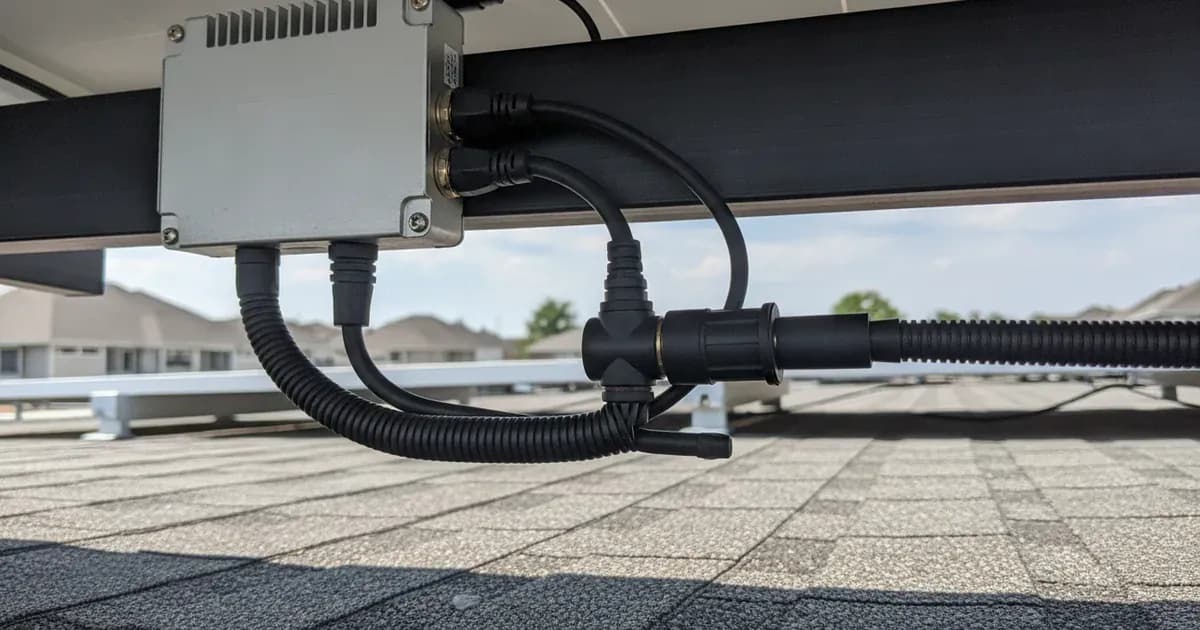
Microinverters connect in parallel along the AC trunk bus cable using dedicated waterproof connectors. This design creates a robust and weather-resistant connection for the entire PV array. The trunk cable collects the AC output from each microinverter and routes it to the main electrical panel.
Proper installation of the AC trunk bus cable is crucial for system performance and safety. It is important to ensure all connections are secure and sealed to prevent moisture ingress. The system is designed for continuous equipment grounding continuity, meaning the inverter chassis ground and any battery metal enclosure should be bonded to the main installation earthing terminal. This ensures a safe path for fault currents.
Communication and Monitoring with Sub-1G and S-Miles Cloud
Effective monitoring and management are vital for optimising a solar PV system's performance. Hoymiles microinverters utilise advanced communication technologies to provide detailed insights into your system.
Microinverters transmit module-level operating telemetry to the gateway via sub-1GHz wireless signals. This wireless communication allows for efficient data transfer without the need for additional data cables between each microinverter and the gateway. The gateway then sends this data to the S-Miles Cloud platform.
Commissioning, module physical layout mapping, and monitoring are configured via S-Miles Cloud. This cloud-based platform allows installers to set up the system, map the physical location of each module, and monitor performance in real-time. This module-level performance telemetry helps identify and diagnose issues quickly, ensuring the system operates at peak efficiency.
Essential Safety Practices for Installation
Safety is paramount when installing or maintaining any electrical system, especially solar PV. Hoymiles microinverter installations require adherence to specific safety protocols.
A critical safety measure is to isolate the AC branch circuit breaker before disconnecting any microinverter trunk connectors. This ensures that the circuit is de-energised, preventing electrical shock hazards. Never attempt to disconnect live connectors.
Furthermore, continuous equipment grounding continuity is essential. The inverter chassis ground and any battery metal enclosure must be bonded to the main installation earthing terminal. This provides a safe path for electrical faults and protects against electric shock. Hoymiles microinverters also feature certified anti-islanding protection, which means they will automatically disconnect from the grid if a power outage occurs, protecting utility workers.
What You Can Check Yourself, and What You Cannot
As a homeowner, there are certain aspects of your Hoymiles microinverter system you can monitor, but most installation and maintenance tasks require a qualified professional.
System Task | Homeowner Permission | Qualified Installer Requirement |
|---|---|---|
System Monitoring | View module-level yield and alerts via S-Miles Cloud | Configure gateway, map physical layout, and perform cloud commissioning |
Physical Array Inspection | Visual check for surface debris, shading, or physical damage | Inspect rooftop bracket mounting, trunk sealing, and cable routing |
Electrical Connectors | Strictly prohibited from disconnecting live trunk connectors | Isolate AC branch breakers before disconnecting trunk bus connectors |
Branch Circuit Sizing | Observe total generation output | Calculate maximum microinverter count per AC breaker rating |
Earthing & Safety | None (inspect external earthing visually) | Bond microinverter chassis to main installation earthing terminal |
You can typically monitor your system's performance through the S-Miles Cloud application. This allows you to view module-level performance telemetry and identify if any panels are underperforming. You can also visually inspect the solar panels and cabling for any obvious physical damage or debris.
However, any work involving electrical connections, including the AC trunk bus cable or microinverter connectors, must be performed by an accredited installer. This includes troubleshooting electrical faults, disconnecting or connecting microinverters, and performing any repairs. Attempting these tasks without proper training and tools can be dangerous and may void your warranty. The maximum allowable microinverter count per AC branch circuit breaker rating must never be exceeded, and this calculation is part of professional system design.
What the Published Sources Do Not Tell You
While official scheme guidelines provides key technical specifications and wiring rules, it does not detail specific wiring diagrams for various installation scenarios or the maximum allowable microinverter count per AC branch circuit breaker rating. These details are typically found in comprehensive installation manuals provided by Hoymiles or determined by local electrical codes and system design.
Official scheme guidelines also does not specify the exact process for bonding the inverter chassis ground and battery metal enclosure to the main installation earthing terminal, beyond stating the requirement. The precise method and components for earthing will depend on the specific installation site and local regulations. For these specific details, always refer to the full Hoymiles installation manual for your specific microinverter model and consult with a qualified electrician.
Still showing the fault? Book a technician
If the steps above did not clear it, tell us the inverter or battery and the exact code. We pass it to a technician who covers your city; visit charges are quoted before they come.
How this pays for the site: the technician or verifier pays SolarNevs a fixed introduction fee. Nobody pays to be recommended, and you are free to use our free guides instead.
Frequently asked questions
What is the Hoymiles AC trunk bus cable system?
The Hoymiles AC trunk bus cable system connects microinverters in parallel using dedicated waterproof connectors. This system facilitates the collection of AC power from individual microinverters into a single branch circuit.
How do Hoymiles microinverters achieve rapid shutdown?
Hoymiles microinverters provide inherent module-level rapid shutdown. This feature complies with safety rules, ensuring that PV modules can be quickly de-energised at the module level for safety during emergencies.
How are Hoymiles microinverters monitored and commissioned?
Module-level operating telemetry is transmitted to a gateway via sub-1GHz wireless signals. Commissioning, including physical layout mapping and monitoring, is configured through the S-Miles Cloud platform.
What safety precautions are necessary when working with Hoymiles microinverter trunk connectors?
Always isolate the AC branch circuit breaker before disconnecting any microinverter trunk connectors. This ensures the circuit is de-energised, preventing electrical shock hazards.
Are Hoymiles microinverters compatible with different electrical systems?
Yes, Hoymiles microinverters are compatible with standard single-phase and three-phase electrical distribution systems globally. They are engineered for both residential and commercial applications.
References
- Hoymiles HMS Series Microinverter User Manual — accessed 27 August 2026
- Hoymiles S-Miles Cloud User Guide — accessed 27 August 2026
Related guides
More from inverter errors & fixes.