Solar Inverter High Grid Voltage and Volt-Rise Tripping in the UK: Fix Guide
Updated 18 September 2026 · By SolarNevs Research Desk, Dealer surveys + verified sources · 6 sources · Method ↗
Key Takeaways
- Under the ESQCR 2002, British low-voltage supplies have a declared voltage of 230 volts with a permitted variation of 10 per cent above or 6 per cent below at 50 hertz.
- Inverter overvoltage trips typically peak around midday when maximum solar generation coincides with high neighbourhood export, creating volt-rise along the AC supply cable.
- Technical root causes center on voltage rise due to high export and AC cable impedance between the inverter output terminals and the domestic consumer unit.
- Voltage testing involves severe shock risks: WARNING HIGH LIFE RISK DUE TO FIRE OR ELECTROCUTION. The Sunsynk Ecco Hybrid Inverter can only be installed by a qualified licensed electrical contractor. This is not a DIY product.
Why does your solar inverter disconnect on sunny afternoons?
It is frustrating when your solar panels generate maximum energy on an unclouded summer afternoon, only for the inverter display to flash an overvoltage warning, shut down generation, and enter an idle countdown.
This shutdown is an automated safety response mandated by UK grid codes. Inverters disconnect because alternating-current electricity flows from a higher voltage potential to a lower voltage potential. To push solar generation back into the national grid, your inverter must raise its output voltage slightly above the prevailing grid voltage. If the local electricity distribution network is already operating near its upper regulatory boundary, that additional volt-rise pushes the inverter past its mandatory ENA G98 protection limit.
Statutory voltage standards across Great Britain
Electricity distribution in England, Scotland, and Wales is governed by statutory legislation. Under Regulation 27 of the Electricity Safety, Quality and Continuity Regulations 2002 (ESQCR 2002):
- The declared parameters require that the frequency declared pursuant to paragraph (1) shall be 50 hertz and the voltage declared in respect of a low voltage supply shall be 230 volts between the phase and neutral conductors at the supply terminals.
- For frequency stability, statutory standards enforce a variation not exceeding 1 per cent above or below the declared frequency.
- For domestic voltage, statutory tolerances permit in the case of a low voltage supply, a variation not exceeding 10 per cent above or 6 per cent below the declared voltage at the declared frequency.
- For commercial distribution below 132,000 volts, regulations permit in the case of a high voltage supply operating at a voltage below 132,000 volts, a variation not exceeding 6 per cent above or below the declared voltage at the declared frequency; and maintain supply stability.
- For high-voltage transmission, statutory standards enforce (d) in the case of a high voltage supply operating at a voltage of 132,000 volts or above, a variation not exceeding 10 per cent above or below the declared voltage at the declared frequency.
This statutory envelope establishes a legal domestic single-phase voltage boundary with upper tolerance up to 10 per cent above declared supply. Distribution Network Operators (DNOs) must legally supply power within these boundaries.
Regulatory Parameter | Statutory Value | Statutory Reference |
|---|---|---|
Declared nominal low voltage | 230 volts single-phase | "the frequency declared pursuant to paragraph (1) shall be 50 hertz and the voltage declared in respect of a low voltage supply shall be 230 volts between the phase and neutral conductors at the supply terminals." https://www.legislation.gov.uk/uksi/2002/2665/regulation/27/made |
Low voltage upper statutory tolerance | +10 per cent above declared voltage | "in the case of a low voltage supply, a variation not exceeding 10 per cent above or 6 per cent below the declared voltage at the declared frequency;" https://www.legislation.gov.uk/uksi/2002/2665/regulation/27/made |
Low voltage lower statutory tolerance | -6 per cent below declared voltage | "in the case of a low voltage supply, a variation not exceeding 10 per cent above or 6 per cent below the declared voltage at the declared frequency;" https://www.legislation.gov.uk/uksi/2002/2665/regulation/27/made |
Declared grid frequency | 50 hertz | "the frequency declared pursuant to paragraph (1) shall be 50 hertz and the voltage declared in respect of a low voltage supply shall be 230 volts between the phase and neutral conductors at the supply terminals." https://www.legislation.gov.uk/uksi/2002/2665/regulation/27/made |
Frequency tolerance | +/- 1 per cent variation | "a variation not exceeding 1 per cent above or below the declared frequency;" https://www.legislation.gov.uk/uksi/2002/2665/regulation/27/made |
Distribution network ceiling | Below 132,000 volts variation 6 per cent | "in the case of a high voltage supply operating at a voltage below 132,000 volts, a variation not exceeding 6 per cent above or below the declared voltage at the declared frequency; and" https://www.legislation.gov.uk/uksi/2002/2665/regulation/27/made |
High voltage network limit | 132,000 volts or above variation 10 per cent | "(d) in the case of a high voltage supply operating at a voltage of 132,000 volts or above, a variation not exceeding 10 per cent above or below the declared voltage at the declared frequency." https://www.legislation.gov.uk/uksi/2002/2665/regulation/27/made |
Inverter-side causes: AC cable impedance and volt-rise
The primary technical root cause within customer premises is voltage rise due to high export and AC cable impedance.
Every electrical conductor has internal resistance. When your solar panels generate peak power, export current flowing through the cable causes an ohmic voltage rise, meaning the voltage at the inverter terminals sits higher than at the main distribution board.
On UK hybrid units such as Sunsynk, standard operating parameters specify Output Frequency and Voltage 50/60Hz; L/N/PE 220/230Vac (single phase). Installers must ensure that All wiring and cable sizes must comply with your particular country’s wiring regulations and codes of Practices. Ensure that suitable disconnection devices and RCDs are fitted.
When overvoltage faults occur, manufacturers recommend practical diagnostic steps:
- Optimize AC cabling or reduce export if impedance-related to ensure that line resistance remains within acceptable limits.
- Follow standard manufacturer triage: 1.Update to the latest firmware. 2. Check the safety code settings and the grid voltage.
- If operational issues persist after initial parameter verification: 3.If the problem remains, Please contact the SolaX technical support team.
Safety rules: testing live AC voltages
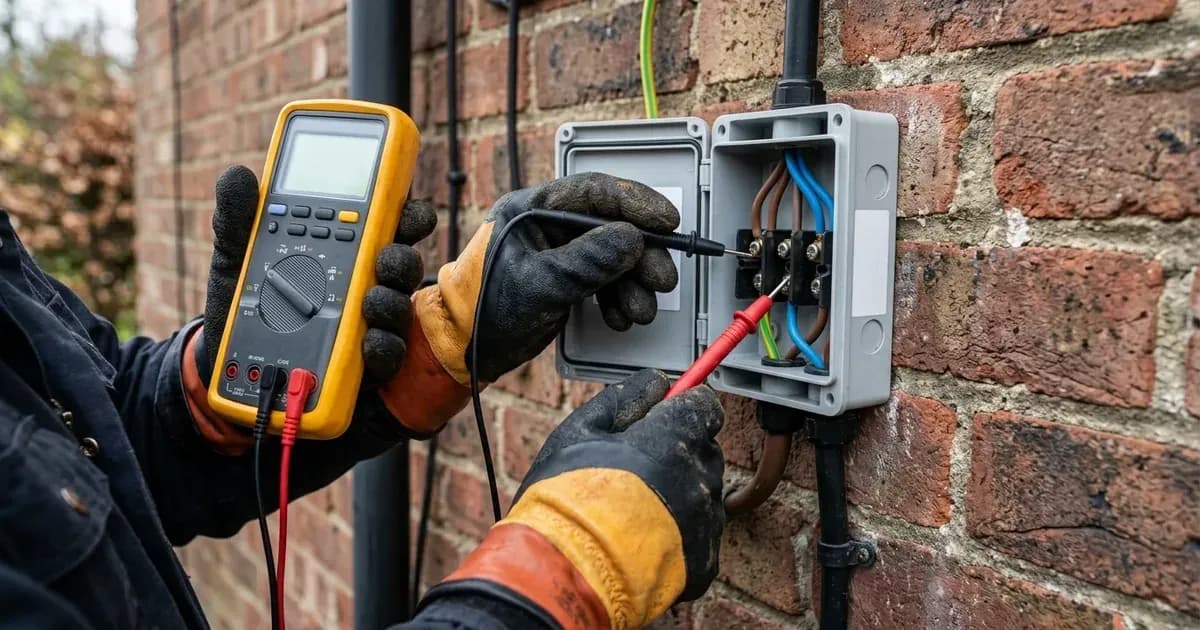
Measuring terminal voltages carries severe risk of electrocution:
- Inverter warnings state: WARNING HIGH LIFE RISK DUE TO FIRE OR ELECTROCUTION. The Sunsynk Ecco Hybrid Inverter can only be installed by a qualified licensed electrical contractor. This is not a DIY product.
- Technicians must remember that The system is capable of retaining a high voltage, even when disconnected.
- Homeowners should never open the AC isolator enclosure or insert multimeter probes into live terminals.
- Never modify inverter internal grid protection country settings without explicit written authorization from your DNO; altering protection thresholds invalidates your ENA G98 certification and breaches network safety rules.
Step-by-step resolution roadmap
Step one: Verify the baseline incoming voltage
Have an electrician measure the voltage at your consumer unit with the solar inverter switched off. If the baseline incoming grid voltage already exceeds statutory limits, the fault lies entirely with the local distribution network.
Step two: Upgrade AC generation cabling
If the baseline grid voltage is acceptable with the inverter isolated but rises above statutory limits during active generation, the AC cable run possesses excessive resistance for its length. Upgrading AC conductors to a heavier cross-section significantly reduces line resistance and cures volt-rise tripping.
Step three: Log a formal DNO voltage complaint
If incoming voltage persistently exceeds statutory limits, follow the official GivEnergy guidance: Grid Voltage Too High - Ensure that the AC isolator is switched on and the AC connections on the underside of the inverter are tight and sound, if connections are good please contact the local DNO.
Contact your regional Distribution Network Operator (UK Power Networks, National Grid, SSEN, SP Energy Networks, Northern Powergrid, or Electricity North West) via the 105 national helpline. Request an official 7-day voltage monitoring investigation. If the data logger confirms voltages exceeding statutory boundaries, the DNO is legally obligated under ESQCR Regulation 27 to adjust local distribution substation transformer tap settings to bring network voltage back into legal tolerance.
Frequently asked questions
Why does my solar inverter trip out on bright sunny days around midday?
On bright sunny afternoons, local solar exports peak across neighbourhood networks. Combined with local AC cable resistance, generation causes volt-rise; if voltage exceeds the statutory ceiling or inverter G98 limits, the inverter disconnects to protect connected appliances.
What is the legal statutory voltage limit in Great Britain?
Under Regulation 27 of the Electricity Safety, Quality and Continuity Regulations 2002, the declared low voltage supply is 230 volts with permitted statutory variations not exceeding 10 per cent above or 6 per cent below, giving an operating band of 216.2V to 253.0V.
Can an installer adjust inverter overvoltage limits to stop tripping?
No. ENA Engineering Recommendation G98 mandates strict disconnection thresholds. Bypassing statutory voltage protection without explicit Distribution Network Operator (DNO) consent is illegal and risks damaging household appliances.
How can high grid voltage tripping be fixed on a domestic solar system?
Qualified electricians check whether undersized AC cabling causes excessive volt-rise and can upgrade cable cross-sections. If the incoming grid voltage is already above statutory limits with generation turned off, the homeowner must contact their regional DNO to lower substation transformer taps.
References
- Electricity Safety, Quality and Continuity Regulations 2002 Statutory Instrument — accessed 29 August 2026
- Growatt Technical Support: Error 300 AC Voltage Out of Range Diagnostics — accessed 29 August 2026
- SolaX Power Help Center: Grid Voltage Fault Diagnostic Guidance — accessed 29 August 2026
- Sunsynk Ecco Single-Phase Hybrid Inverter User Manual v23 — accessed 29 August 2026
- GivEnergy Commissioning Portal Fault Clearing Matrix — accessed 29 August 2026
- GivEnergy Gen 3 Hybrid Inverter Technical Manual — accessed 29 August 2026
Related guides
More from inverter errors & fixes.