Solar PV DC Isolation Fault Troubleshooting: UK Identification Guide
Updated 18 September 2026 · By SolarNevs Research Desk, Dealer surveys + verified sources · 7 sources · Method ↗
Key Takeaways
- Inverter isolation alarms signify that electrical insulation between the live DC array conductors and building earth has degraded below statutory thresholds.
- A common seasonal trigger is Low PV insulation resistance due to moisture (dew, rain) on panels or cables causing temporary leakage current.
- Testing requires technicians to Disconnect DC inputs; measure insulation resistance PV+ to ground and PV- to ground (>500 kΩ required in dry conditions).
- Installers must follow strict grounding rules: Do not connect any PV modules with possible current leakage to the inverter to avoid any malfunction. For example, grounded PV modules will cause current leakage to the inverter. When using PV modules, please ensure the PV+ & PV- of solar panel is not connected to the system ground bar.
- Quality MC4 assembly is critical, ensuring Barbs on the upper right hand image lock into slots on the other half to prevent the connector from accidentally separating once the two halves have been pushed together.
What is a solar PV DC isolation fault?
Before synchronising with the domestic electrical network every morning, a modern grid-tied or hybrid solar inverter performs automated safety diagnostics. Among the most critical tests is measuring the direct-current insulation resistance (often labeled Riso) between the solar array circuits and earth.
When the inverter detects a breakdown in conductor insulation, it locks out generation to protect residents and equipment. The core diagnostic fault means the resistance in dc side (solar) is too low on one or more strings. Across multi-brand hardware, SolaX displays IE 13 Isolation Fault Insulation fault, while GivEnergy records INV_GFCI_FAULT - Please make sure that there is no DC voltage to earth or STORAGE_ERROR_GFCI_FAULT - Please make sure that there is no DC voltage to earth.
Because domestic solar arrays operate at high DC voltages, any degradation in cable sheaths, junction boxes, or plug connectors allows leakage current to reach the mounting rails, roof slate brackets, or building structure.
Morning dew vs permanent ground faults
Homeowners across the UK frequently notice that isolation alarms appear early on damp autumn and winter mornings, only to clear by midday:
Transient morning moisture
During cold nights, dew forms across panel glass, frame edges, and exposed cable surfaces. This moisture layer acts as a temporary conductive bridge across minor microscopic cracks in old module backsheets or weathered connector seals. When sunshine warms the array, the surface condensation evaporates, insulation resistance rises, and normal generation resumes.
Permanent ground faults
If the inverter trips on dry, warm afternoons, or immediately trips whenever the DC isolator is engaged, the array suffers from a permanent ground fault. Common physical causes include rodent damage biting through DC insulation, sharp roof tile edges pinching strings under mounting rails, or water pooling inside an outdoor DC enclosure.
Diagnostic Parameter | Inverter Threshold / Standard Requirement | Hardware Reference |
|---|---|---|
DC Insulation Resistance Minimum | Disconnect DC inputs; measure insulation resistance PV+ to ground and PV- to ground (>500 kΩ required in dry conditions) | "Disconnect DC inputs; measure insulation resistance PV+ to ground and PV- to ground (>500 kΩ required in dry conditions)." https://growatt.tech/2025/12/19/growatt-error-203-pv-isolation-low-morning-leakage-current/ |
Earth Voltage Verification | Verify zero DC potential across conductors | "INV_GFCI_FAULT - Please make sure that there is no DC voltage to earth" https://kb.givenergy.cloud/article.php?id=71 |
SolaX Isolation Alarm | Core isolation warning identifier | "IE 13 Isolation Fault Insulation fault" https://www.solaxpower.com/uploads/file/solax-320101081103-x1-hybrid-g4-series-user-manual-en.pdf |
System Ground Isolation | Array polarity must remain ungrounded | "Do not connect any PV modules with possible current leakage to the inverter to avoid any malfunction. For example, grounded PV modules will cause current leakage to the inverter. When using PV modules, please ensure the PV+ & PV- of solar panel is not connected to the system ground bar." https://www.bimblesolar.com/docs/Sunsynk_Ecco_SG04LP1_UserManual_v23_English_compressed.pdf |
Step-by-step diagnostic workflow for technicians
Diagnosing an isolation fault requires systematic elimination of individual array circuits:
Step one: Isolate the inverter safely
Turn off the AC supply at the dedicated generation consumer unit breaker, switch off the DC rotary isolator, and completely isolate the inverter.
Step two: Disconnect array strings
Unplug DC connectors from the underside of the inverter chassis and take off all of the pv strings.
Step three: Measure string insulation resistance
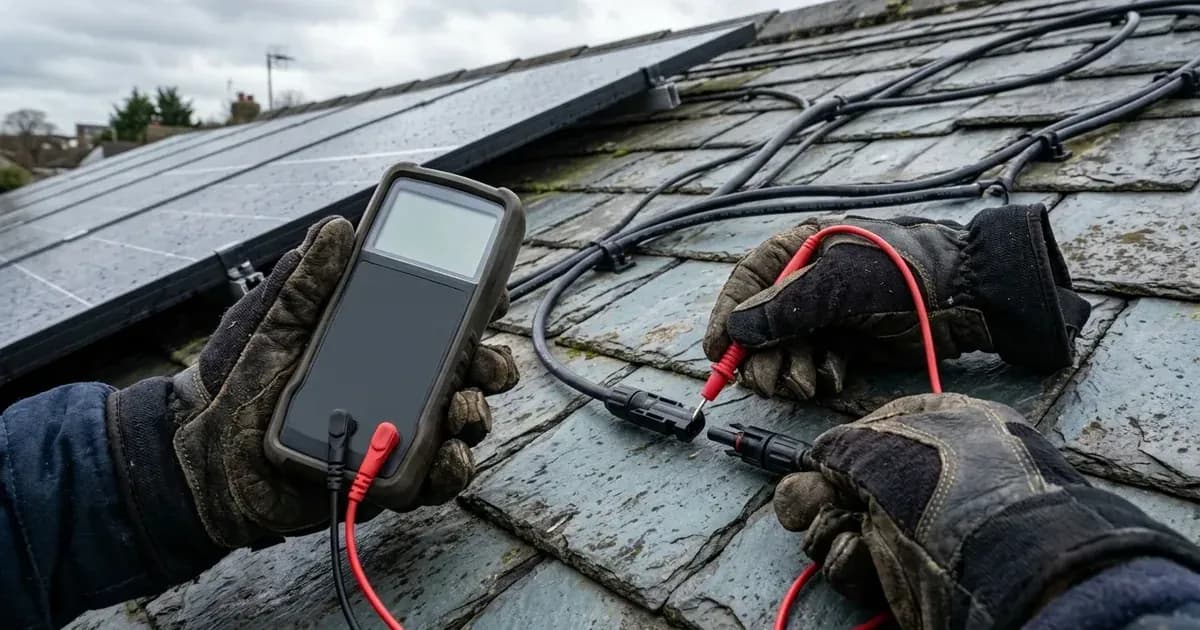
Using an approved high-voltage insulation tester, Disconnect DC inputs; measure insulation resistance PV+ to ground and PV- to ground (>500 kΩ required in dry conditions). Test both polarities against the main earthing terminal.
Step four: Inspect cabling and connectors
Visually inspect the physical array wiring: • Please check the wire insulation for damage. Look specifically for pinched cables against slate flashings, crushed conduits, or degraded outer insulation.
Step five: Check connector crimping and locking
Inspect all MC4 connections along the roof run. Ensure proper assembly per manufacturer standards: The correct steps in assembling the DC connector are explained below: 1. Strip 7mm of the plastic coating off the DC wire and disassemble the connector cap nut. 2. Crimp metal terminals with crimping pliers. 3. Insert the contact pin into the connector housing until it locks into place. Then screw the cap nut onto the connector housing. Torque to 2.5-3 N.m. Verify that connector latching barbs have clicked home securely.
Safety rules: DC shock hazards on live strings
Working on DC solar arrays presents severe shock and fire risks:
- Inverter safety notices explicitly warn: WARNING Please do not connect the PV array's positive and negative poles to the ground. This can seriously damage the inverter. Before connecting the inverter, please make sure the PV array open-circuit voltage is within the maximum limit of the inverter.
- Solar modules generate lethal voltages whenever illuminated by daylight. Unlike AC circuits, DC solar strings cannot simply be turned off at a wall switch; panels remain permanently energised.
- Never disconnect DC connectors while the system is generating current; opening an energised DC circuit creates continuous high-temperature electrical arcing that can destroy connectors and ignite nearby roof felt.
- If physical troubleshooting does not reveal the root cause: If persistent, contact SolaX support.
Remediation and permanent fixes
Once the offending string or module is identified, permanent resolution requires:
- Replacing damaged DC solar cables with double-insulated, UV-resistant cross-linked solar cable.
- Re-crimping any corroded or moisture-damaged MC4 connectors using calibrated ratchet crimpers and genuine matching connectors.
- Lifting cables away from roof tiles using stainless steel cable clips to prevent future mechanical abrasion.
- Resealing any outdoor junction boxes or replacing water-compromised DC isolators with IP65-rated enclosures fitted with bottom-entry compression glands.
Frequently asked questions
What does a PV isolation fault mean on a solar inverter?
A PV isolation fault indicates that the inverter detected compromised electrical insulation on the direct-current side, meaning the resistance in dc side (solar) is too low on one or more strings.
Why does my solar inverter show an isolation fault only in the morning?
Morning condensation, overnight dew, or damp weather coats rooftop panels and connectors with moisture, creating temporary surface leakage paths to ground that often evaporate as ambient temperatures rise.
Can I reset a DC isolation fault and leave the system running?
No. While nuisance morning faults caused by dew may clear temporarily, genuine isolation faults indicate damaged cables, water ingress, or pinched wires, requiring professional verification that there is no DC voltage to earth.
Is a PV isolation fault dangerous?
Yes. Low DC insulation resistance creates severe electric shock hazards from metal mounting frames and roof flashings, and can escalate into dangerous high-voltage DC arcing if left unresolved.
References
- Solis Service Center: 1033 PV ISO PRO Isolation Troubleshooting — accessed 29 August 2026
- Growatt Technical Support: Error 203 PV Isolation Low Diagnostics — accessed 29 August 2026
- SolaX X1-Hybrid G4 Series User Manual — accessed 29 August 2026
- SolaX Power Help Center: Earth Fault Error Troubleshooting — accessed 29 August 2026
- Sunsynk Ecco Single-Phase Hybrid Inverter User Manual v23 — accessed 29 August 2026
- GivEnergy Commissioning Portal Fault Clearing Matrix — accessed 29 August 2026
- BRE National Solar Centre: Fire and Solar PV Systems Evidence Report — accessed 29 August 2026
Related guides
More from inverter errors & fixes.