ECO4 Free Solar Panels Grant: Eligibility & Rules UK
Updated 18 September 2026 · By SolarNevs Research Desk, Dealer surveys + verified sources · 2 sources · Method ↗
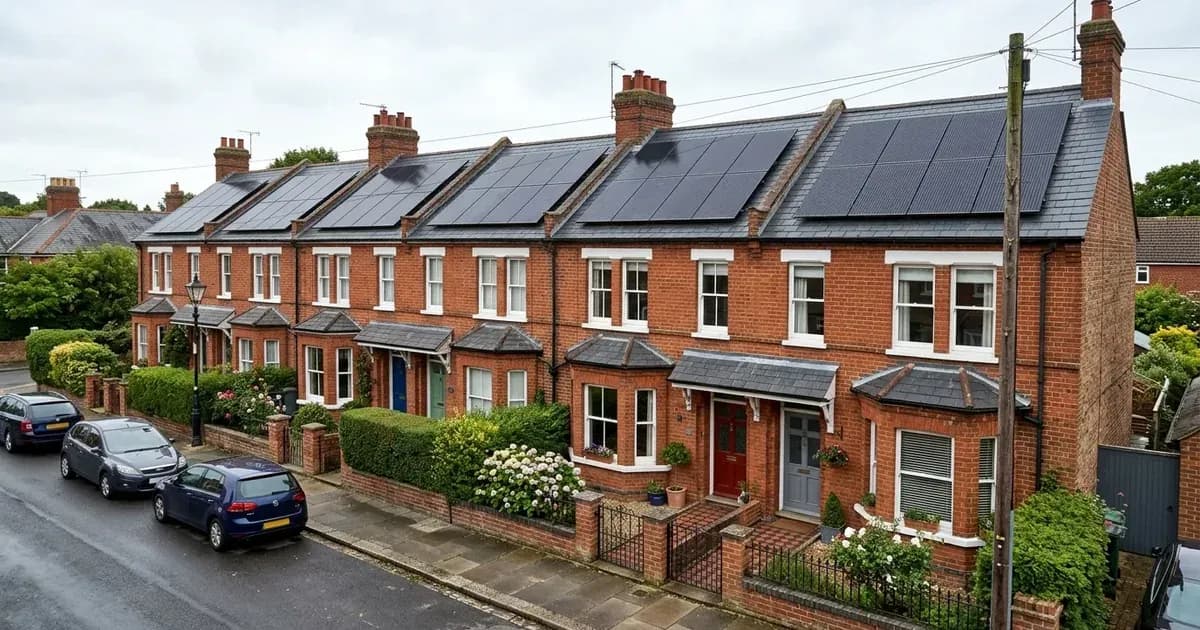
The Energy Company Obligation (ECO) is a government energy efficiency scheme in Great Britain designed to tackle fuel poverty and help reduce carbon emissions. Governed by primary statutory orders, ECO represents the United Kingdom's flagship residential obligation placed directly on commercial energy suppliers.
For low-income householders and families struggling with domestic heating expenses, the current fourth iteration of the programme—known as ECO4—provides fully funded capital grants for deep residential retrofits. These measures include insulation, high-efficiency heating systems, and rooftop solar photovoltaic (PV) arrays.
Understanding how ECO4 operates, which households qualify, and the statutory rules governing supplier delivery enables consumers to access fully funded solar generation without personal capital outlay.
<Callout type="info" title="Key Scheme Facts: Ofgem & DESNZ ECO4">
- Core Scheme Purpose: Designed to tackle fuel poverty and help reduce carbon emissions across Great Britain.
- Historic Development: The scheme has seen 4 iterations, ECO, ECO1, ECO2 and ECO3, culminating in ECO4.
- Extended Timeline: ECO4 applies to measures installed from 1 April 2022 and will run until 31 December 2026, following a nine-month extension.
- Statutory Enforcement: The ECO3 scheme closed on 31 March 2022 and the ECO4 Order came into force in July 2022.
- Supplier Obligation: Works by placing a Home Heating Cost Reduction Obligation (HHCRO) on medium and large energy suppliers.
- Target Beneficiaries: Obligated suppliers must promote measures that improve the ability of low-income, fuel-poor and vulnerable households to heat their homes.
- EPC Thresholds: Homeowners require an EPC rating of D, E, F or G; private and social tenants require an EPC rating of E, F or G.
</Callout>
Statutory Framework and Administrative Roles
The governance of ECO4 is split between central government policy formulation and independent regulatory administration:
- Department for Energy Security and Net Zero (DESNZ): The Department for Energy Security and Net Zero set ECO4 policy and legislation, determining carbon and fuel poverty targets.
- Office of Gas and Electricity Markets (Ofgem): We administer ECO4 on behalf of DESNZ. Our duties include monitoring supplier compliance, validating installed measures, allocating company targets, and auditing supply chains.
The statutory progression of the programme reflects long-term policy continuity. The previous ECO3 scheme closed on 31 March 2022 and the ECO4 Order came into force in July 2022. Under the updated regulations, ECO4 applies to measures installed from 1 April 2022 and will run until 31 December 2026, following a nine-month extension enacted to ensure uninterrupted delivery.
How the Home Heating Cost Reduction Obligation Works
Unlike taxpayer-funded voucher grants such as the Boiler Upgrade Scheme, ECO4 does not draw funds directly from HM Treasury. Instead, the ECO scheme works by placing a Home Heating Cost Reduction Obligation (HHCRO) on medium and large energy suppliers.
Under HHCRO, obligated suppliers must promote measures that improve the ability of low-income, fuel-poor and vulnerable households to heat their homes. The overall target for these measures is divided between suppliers based on their relative share of the domestic gas and electricity market.
Because major retail energy companies must deliver statutory bill savings to satisfy their legal license conditions, suppliers contract network installers to survey properties, specify improvements, and install insulation and solar panels at no cost to the qualifying resident.
Scheme Parameter | Statutory Specification | Governing Authority |
|---|---|---|
Legislative Mechanism | Home Heating Cost Reduction Obligation (HHCRO) | DESNZ / Ofgem |
Delivery Window | 1 April 2022 to 31 December 2026 (9-month extension) | Statutory Order July 2022 |
Obligated Entities | Medium and large energy suppliers | Divided by gas/electricity market share |
Homeowner Housing Gateway | EPC Bands D, E, F, or G | GOV.UK Energy Company Obligation |
Private Tenant Gateway | EPC Bands E, F, or G (requires landlord consent) | GOV.UK Energy Company Obligation |
Social Housing Gateway | EPC Bands E, F, or G (first-time heating/insulation) | GOV.UK Energy Company Obligation |
Household and Property Eligibility Criteria
Eligibility for ECO4 funding is assessed across two distinct criteria: household financial status and property energy performance.
1. Means-Tested Benefits Gateway
For private domestic tenures, qualification is targeted at low-income households. You might be eligible for help if you live in private housing and get one of the following benefits:
- Universal Credit
- Pension Credit (Guarantee or Savings Credit)
- Income Support
- Income-based Jobseeker's Allowance (JSA)
- Income-related Employment and Support Allowance (ESA)
- Child Tax Credit and Working Tax Credit
- Housing Benefit
- Child Benefit (subject to defined household income thresholds)
2. Property Energy Performance Certificate (EPC) Rules
In addition to benefit eligibility, the building envelope must demonstrate clear thermal inefficiency:
- Owner-Occupiers: If you own your house, it must have an energy efficiency rating of D, E, F or G to be eligible.
- Private Tenants: If you rent from a private landlord, the house must have an energy efficiency rating of E, F or G to be eligible. You must have the owner’s permission to do the work.
- Social Housing Tenants: If you live in social housing that has an energy efficiency rating of E, F or G you might be eligible for help with insulation or installing a heating system for the first time.
Solar PV Deployment Rules Under ECO4
Under ECO4, solar photovoltaic systems are deployed primarily as complementary measures within a fabric-first whole-house approach. Energy suppliers rarely fund standalone solar panels in isolation; instead, installers prioritise building fabric measures (such as cavity wall, loft, or external wall insulation) alongside heat pump installations.
Where an electrically heated or heat-pump-equipped home requires additional on-site microgeneration to achieve the mandatory minimum EPC improvement score mandated by Ofgem, rooftop solar panels are specified and fully funded as part of the total measure package.
Application Pathways: Council Flex and Direct Supplier Route
Householders seeking to access ECO4 grant funding can pursue two official delivery routes:
- Local Authority Delivery (ECO4 Flex): Contact your local council to find out if they’re taking part in the Energy Company Obligation scheme. Under the Local Authority Flexible Eligibility mechanism, councils can refer vulnerable residents who do not receive means-tested benefits but suffer from severe fuel poverty or low household income.
- Direct Energy Supplier Route: Contact an energy supplier directly. Householders are not restricted to their existing energy supplier; any obligated supplier operating in the region can evaluate the property and deploy measures.
By engaging an approved contractor through an obligated supplier or participating council, qualifying households can secure free solar panels and comprehensive heating upgrades through 31 December 2026.
Frequently asked questions
Can I get free solar panels under the ECO4 scheme in the UK?
Yes, qualifying low-income and fuel-poor households can receive fully funded solar panels under ECO4, typically installed as part of a multi-measure heating and efficiency package.
What EPC band does my house need to qualify for ECO4?
If you own your home, it must have an EPC rating of D, E, F or G. If you rent from a private landlord or live in social housing, the property must have an EPC rating of E, F or G.
How long is the ECO4 scheme running?
ECO4 applies to measures installed from 1 April 2022 and will run until 31 December 2026, following a nine-month extension approved by government.
How do I apply for ECO4 solar panels and insulation?
Householders can apply by contacting their local council to check for local authority flexibility (ECO4 Flex) participation, or by contacting an obligated energy supplier directly.
References
- Ofgem ECO4 Scheme Overview — accessed 16 September 2026
- GOV.UK Energy Company Obligation — accessed 16 September 2026
Related guides
More from schemes, subsidies & financing.