Flexible Solar Panels: Where Bendy Beats Rigid
Updated 17 September 2026 · By SolarNevs Research Desk, Dealer surveys + verified sources · 1 source · Method ↗
Key Takeaways
- Flexible means cells in polymer instead of glass: bendable to modest curves, a fraction of the weight, glue-down installation.
- The tolls are real: lower efficiency, hotter operation, shorter life — polymer laminate ages years faster than tempered-glass armor.
- The winning venues are narrow and genuine: curved RV roofs, marine decks, weight-limited structures — surfaces racks can't serve.
- Anywhere rigid fits, rigid wins: more watts per dollar, per square foot, and per decade.
What flexibility buys and costs
Delete the glass and frame, laminate the cells in polymer, and a panel becomes a few pounds of bendable sheet that mounts with adhesive or grommets on surfaces conventional racking will never touch. That's the entire product: mounting freedom. Everything else is payment. Efficiency runs below rigid mono because the constructions differ; operating temperature runs above it because glue-down mounting deletes the cooling air gap — and heat cuts silicon output while aging polymer far faster than glass. Warranties tell the honest story: rigid's decades against flexible's handful of years, the gap our lifespan guide's framework predicts from the materials alone.
The venues where flexible genuinely wins
Surface | Why flexible fits |
|---|---|
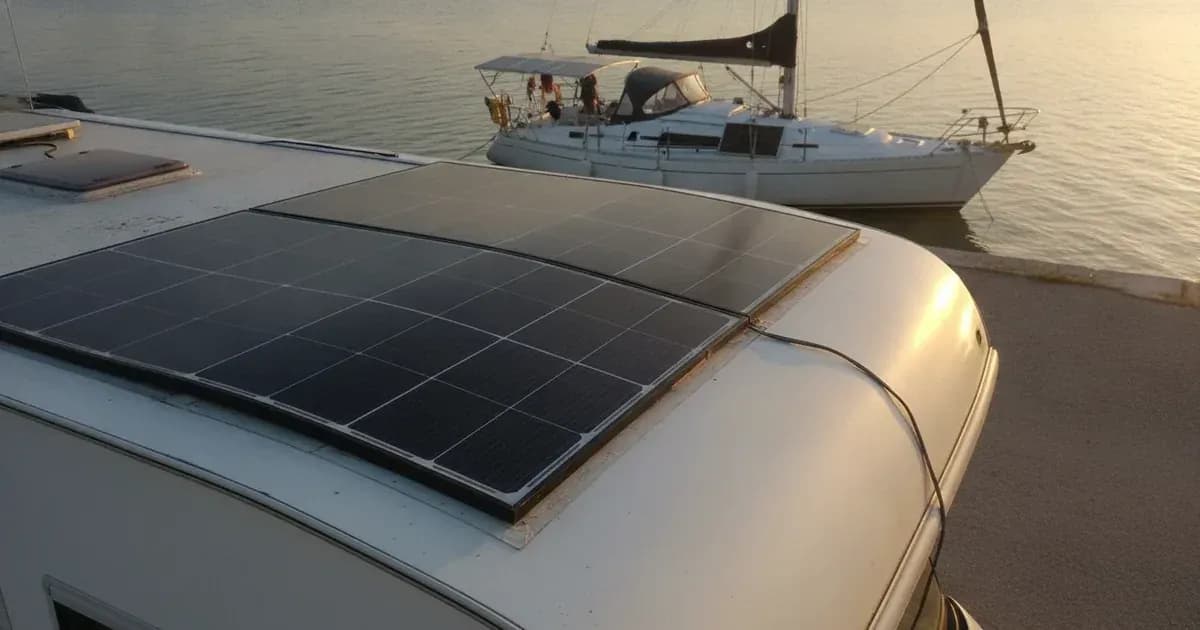
Curved fiberglass RV/camper roofs | Conforms where racks can't; no drilled penetrations |
Boat decks, bimini tops | Walkable, salt-tolerant laminates; zero windage |
Teardrops, vans with structural limits | Weight budget measured in single pounds |
Temporary/leased structures | Removable adhesive beats landlord negotiations |
Backpacks and fold kits | The portable-panel borderland |
The common thread: rigid is impossible, not merely inconvenient.
Note what's absent: house roofs. A shingle roof holds racked rigid panels happily, and every flexible panel sold for one trades away output and years for a flexibility the surface never asked for. The RV solar guide reaches the same verdict from the vehicle side — flat aluminum RV roofs take rigid; the flexible premium is for the curves.
Buying within the category
If your surface genuinely demands flexible: buy marine-grade laminates from established brands (this category's no-name tier ages in months, not years), respect the bend radius (flexible means gentle curves, not folds), plan airflow where any exists (even furring-strip gaps help the heat toll), and treat adhesive mounting as semi-permanent — removal usually sacrifices the panel or the gelcoat. Wire them through the same charge-controller math as any off-grid array, derating expectations for the heat.
And run the honest cross-check first: many "flexible" use-cases are actually portable-panel use-cases wearing glue — a folding rigid kit that stows below deck often beats a laminate cooking on it. Flexible is the right answer to one question — this surface curves and can't carry glass — and a costly answer to every other.
Frequently asked questions
What are flexible solar panels?
Thin laminated panels — silicon cells in polymer sheets instead of glass and frame — that bend to modest curves and weigh a fraction of rigid modules, adhering or lacing to surfaces racks can't touch.
Are flexible panels as good as rigid ones?
No — expect lower efficiency, shorter lifespans (heat ages the polymer laminate faster than glass), and shorter warranties. They're a specialty tool, not a rigid replacement.
Who should buy flexible panels?
Curved or weight-limited surfaces: fiberglass RV roofs, boat decks and bimini tops, teardrop campers, structures that can't carry racking. Everyone else gets more watts per dollar from rigid glass.
Why do flexible panels run hot?
Glued flush to a surface, they lose the airflow gap racked panels enjoy — and heat both cuts output and accelerates the laminate's aging, the category's central trade-off.
References
- US DOE – Solar Photovoltaic Technology Basics — accessed 5 August 2026
Related guides
More from what to buy — and how not to get cheated.