Are Solar Generators Worth It? An Honest Category Review
Updated 17 September 2026 · By SolarNevs Research Desk, Dealer surveys + verified sources · 1 source · Method ↗
Key Takeaways
- Worth it for the right jobs: silent camp power, outage essentials, apartment backup where combustion can't go.
- Not worth it for the imagined ones: bill savings (cents per cycle) and whole-home backup (wrong product class).
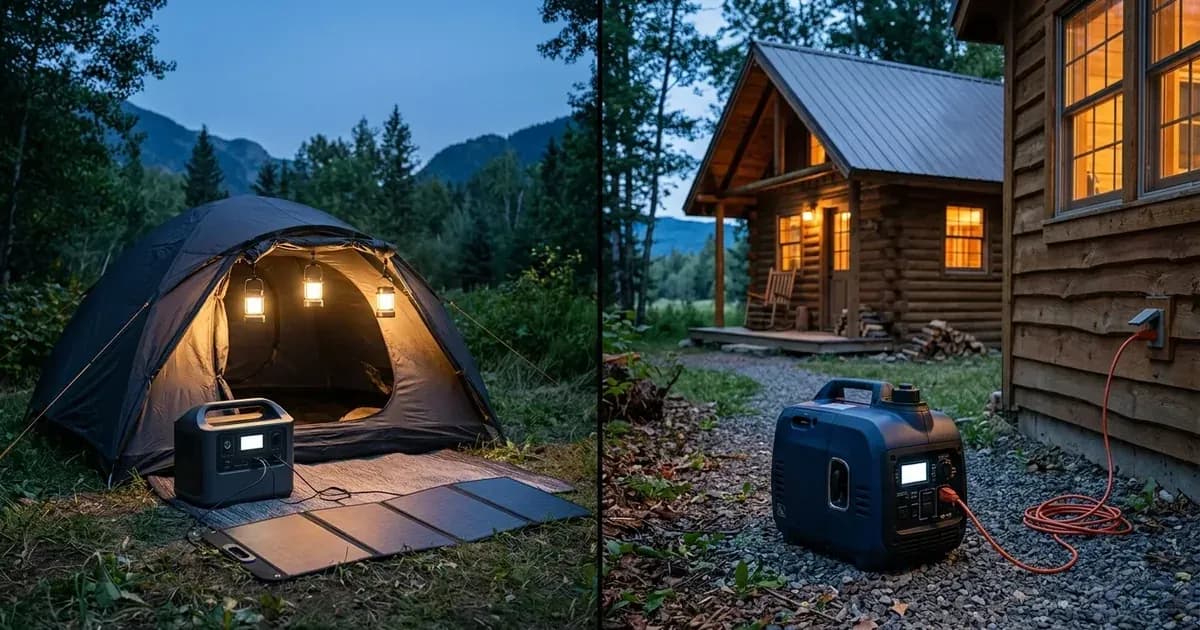
- Against gas: the battery buys silence, indoor safety, and zero maintenance; gas keeps watts-per-dollar and infinite refuel. Many households rationally own both.
- The name oversells: it's a battery with a solar input, and clarity about that is most of the buying wisdom.
What the category actually is
"Solar generator" is marketing for power station: a lithium battery, an inverter, and sockets in a carry case, with a charge port that accepts folding panels among other sources. Nothing generates until you add the panels — most owners charge from the wall before trips — and the honest mental model is a very large power bank that can also sip sunshine. From that clarity, every verdict below follows.
The jobs where it earns the money
Camping and vanlife: silent, fume-free power for lights, devices, CPAPs, and camp kitchens — the RV crowd's gateway hardware and the tent crowd's endgame. Outage essentials: fridge, network, phones through a blackout, sized per our guide, with panels extending it through long events. The gasless constituencies: apartments and condos where a combustion generator is impossible — the battery is the only backup class allowed indoors, which by itself justifies the category's existence. Job sites and tailgates: tool charging and small loads where cords don't reach.
Common thread: capability, not savings. The unit powers places and moments the grid doesn't serve; it never out-earns the grid where the grid works.
The gas generator rivalry, adjudicated
Dimension | Solar/battery station | Gas generator |
|---|---|---|
Watts per dollar | Loses clearly | Wins clearly |
Noise | Silent | The campground grievance |
Indoor use | Safe | Lethal — never |
Maintenance | None | Oil, carbs, stale-fuel rituals |
Endurance | Tank-limited; sun-extended slowly | Refuel-infinite |
Fuel cost | Sunshine/outlet cents | Real dollars per outage-day |
The storm-belt synthesis: battery for nights and essentials, gas for marathon events — complementary, not rivals.
The two illusions to decline
The savings illusion: cycling a 2 kWh battery daily against average grid rates moves cents; the "free electricity" pitch belongs to rooftop panels, whose scale is a hundredfold. The whole-home illusion: expansion batteries and transfer-switch accessories walk portable pricing into wall-battery territory while delivering less — at that budget, the three-job test or a bidirectional EV deserves the money. The portable's charm is portability; the moment the plan bolts it to a wall, buy the wall thing.
Verdict: a genuinely good product category, bought well by people who name the job first — and a disappointing one for buyers chasing the two promises its name whispers but its specs never make.
Frequently asked questions
Are solar generators worth it?
For their actual jobs — quiet camp power, essentials through outages, apartment backup where gas is impossible — yes. As household energy savings or whole-home backup they're the wrong tool: the payback story belongs to rooftop solar.
Solar generator vs gas generator — which is better?
Different trades: gas wins on raw watts per dollar and refuel-anywhere endurance; solar-battery units win on silence, zero fumes (indoor-safe), zero maintenance, and free sunshine refills. Storm-belt households increasingly keep the battery for nights and the gas for marathons.
Do solar generators actually save money on electricity?
No — cycling a small battery against grid rates saves cents. Their value is capability (power where outlets aren't) and insurance (power when outlets die), not bill reduction.
What should I buy instead of a solar generator?
If the goal is bill savings: rooftop panels. Whole-home outage backup: a wall battery or bidirectional EV. Occasional heavy loads at a cabin: honest gas. The power station is for the mobile, gasless middle.
References
- EIA – Electricity prices (context for savings math) — accessed 5 August 2026
Related guides
More from schemes, subsidies & financing.