SMA Sunny Highpower Peak3 Commercial Inverter Setup Guide
Updated 7 September 2026 · By SolarNevs Research Desk, Dealer surveys + verified sources · 4 sources · Method ↗
Key Takeaways
- The SMA Sunny Highpower PEAK3 (SHP 100-20 / SHP 100-20) is a 1500V DC commercial string inverter.
- It supports flexible DC input configurations, including direct string or centralized combiner box connections.
- Central control of decentralized PEAK3 inverters is managed by the SMA Data Manager M via Speedwire fieldbus networks.
- Always switch off the DC input isolator and wait 5 minutes for capacitor discharge before servicing.
Understanding the SMA Sunny Highpower PEAK3 Inverter
The SMA Sunny Highpower PEAK3 (SHP 100-20 / SHP 100-20) is a commercial string inverter designed for large-scale photovoltaic (PV) installations. These inverters operate on high-voltage DC bus architectures, providing high power density suitable for commercial arrays. The system architecture is typically decentralized, with individual inverters distributed across the PV array, but centrally managed.
Core Components and System Architecture
The SMA Sunny Highpower PEAK3 is engineered for decentralized PV systems, where multiple inverters are deployed across a large solar array. This approach allows for a central inverter layout, optimising power conversion and management.
Commercial inverters like the PEAK3 operate on high-voltage DC bus architectures. This design choice enables them to deliver high power density, which is crucial for large commercial arrays where efficiency and space utilisation are paramount.
DC Connection and Combiner Box Integration
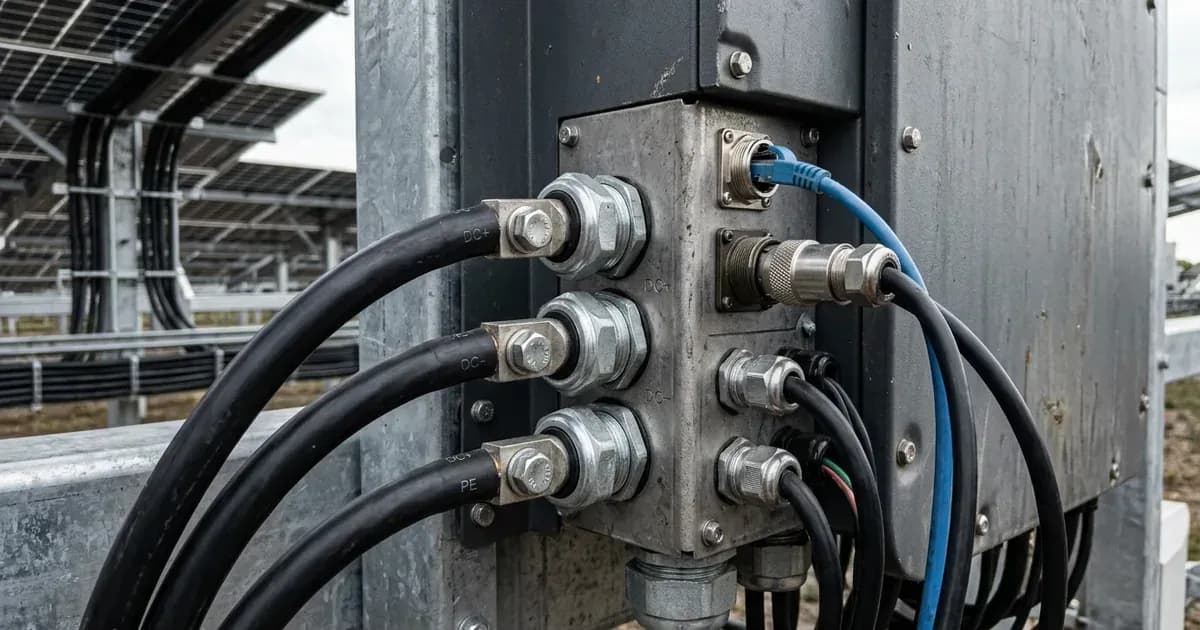
The SMA Sunny Highpower PEAK3 offers flexibility in how DC power from the solar modules is connected. It supports flexible system architectures, allowing direct DC string connection or centralized DC combiner inputs.
DC Wiring Method | Architecture & Cabling Details | Ideal System Application | Key Advantages |
|---|---|---|---|
Direct DC String Connection | Strings of solar modules connect directly to the inverter | Smaller commercial installations or specific array layouts | Direct routing without external combiner enclosures |
Centralized DC Combiner Inputs | Multiple PV strings combine externally to feed high-current inputs | Large-scale or complex commercial PV arrays | Simplifies field DC wiring runs, improves safety, and aids maintenance |
- Direct DC String Connection: Individual strings of solar modules can be connected directly to the inverter. This method is common in smaller commercial installations or specific array layouts.
- Centralized DC Combiner Inputs: For larger or more complex arrays, multiple strings can be combined in external DC combiner boxes. These combiner boxes then feed a single, higher-current DC input to the inverter. This simplifies wiring and can improve system safety and maintenance.
Networking and Central Control with SMA Data Manager M
In SMA PEAK3 systems, the decentralized inverters are controlled centrally. This central control is facilitated by the SMA Data Manager M, which communicates with the inverters via Speedwire fieldbus networks. The Data Manager M acts as the central intelligence, enabling monitoring, control, and data logging for the entire PV plant. This setup allows for efficient operation and remote management of the inverter fleet.
Safety Protocols for Installation and Maintenance
Safety is paramount when working with high-voltage commercial inverters. The SMA Sunny Highpower PEAK3 incorporates several safety features and requires adherence to specific protocols.
One critical safety measure involves the safe DC disconnect and capacitor discharge procedure. Before performing any work on the inverter, you must switch off the DC input isolator. After switching off, it is essential to wait at least 5 minutes for internal capacitors to discharge. This waiting period ensures that residual electrical energy stored within the inverter's capacitors dissipates, preventing electric shock hazards.
Proper earthing is also crucial. You must bond the inverter chassis ground and any associated metal enclosures to the main installation earthing terminal. This protective enclosure earth bonding ensures that in the event of an electrical fault, current is safely directed to the earth, protecting personnel and equipment.
The inverter also features certified anti-islanding protection, ensuring it safely disconnects from the grid during power outages to protect utility workers. It is compatible with standard single-phase and three-phase electrical distribution systems, supporting various grid connection requirements.
What you can check yourself, and what you cannot
As a system owner or operator, you can perform basic visual inspections and monitor system performance through the SMA Data Manager M or Sunny Portal. This includes checking for error messages, verifying power output, and ensuring communication is active.
However, any work involving opening the inverter enclosure, making or changing electrical connections, or troubleshooting internal components must be performed by an accredited installer or qualified service technician. This is due to the high voltages present (up to 1500V DC) and the need for specialised tools and knowledge. Attempting internal repairs without proper training and authorisation can lead to serious injury or damage to the equipment. Always ensure the DC input isolator is switched off and the 5-minute discharge time is observed before any interaction with the inverter's electrical components.
What the published sources do not tell you
While official documentation provides key specifications and features, detailed installation procedures, specific wiring diagrams, and comprehensive troubleshooting guides are typically found in the full engineering manual provided by SMA. These manuals contain critical information regarding cable sizing, torque settings for terminals, specific communication cable requirements (e.g., shielded twisted-pair cables for Speedwire), and environmental considerations for optimal performance. Information on specific grid connection requirements, which can vary by Distribution Network Operator (grid operator) in Great Britain, is also not detailed in general product specifications and must be obtained from the grid operator or a qualified installer. The specific operational parameters of the OptiCool active fan cooling system, beyond its existence, are also not detailed.
Still showing the fault? Book a technician
If the steps above did not clear it, tell us the inverter or battery and the exact code. We pass it to a technician who covers your city; visit charges are quoted before they come.
How this pays for the site: the technician or verifier pays SolarNevs a fixed introduction fee. Nobody pays to be recommended, and you are free to use our free guides instead.
Frequently asked questions
What are the primary technical requirements for sma sunny highpower peak3 commercial inverter setup guide?
Key requirements include compliance with local grid codes, correct equipment certification, and proper electrical isolation.
Who is authorized to install and inspect sma sunny highpower peak3 commercial inverter setup guide?
All high-voltage DC, AC grid tie-in, and switchboard modifications must be performed by a qualified, accredited electrical professional.
How is export power limited in sma sunny highpower peak3 commercial inverter setup guide?
Export limiting is achieved using certified bidirectional smart meters or power sensors providing dynamic feedback to the inverter system.
References
- SMA Sunny Highpower PEAK3 Operating Manual (SHP 100-21 / 150-21 / 172-21 / 180-21) — accessed 6 September 2026
- SMA Sunny Highpower PEAK3 Product Page - 1500 VDC Ratings, OptiCool Cooling and DC Combiner Box Architecture — accessed 6 September 2026
- SMA Data Manager M - Speedwire Fieldbus and Central Plant Control Specifications — accessed 6 September 2026
- NEPRA (Prosumer) Regulations 2026, S.R.O. 251(I)/2026 - Interconnection, Protection and Bidirectional Metering Requirements — accessed 6 September 2026
Related guides
More from inverter errors & fixes.