Solar for Sheds and Outbuildings: The Perfect First System
Updated 18 September 2026 · By SolarNevs Research Desk, Dealer surveys + verified sources · 1 source · Method ↗
Key Takeaways
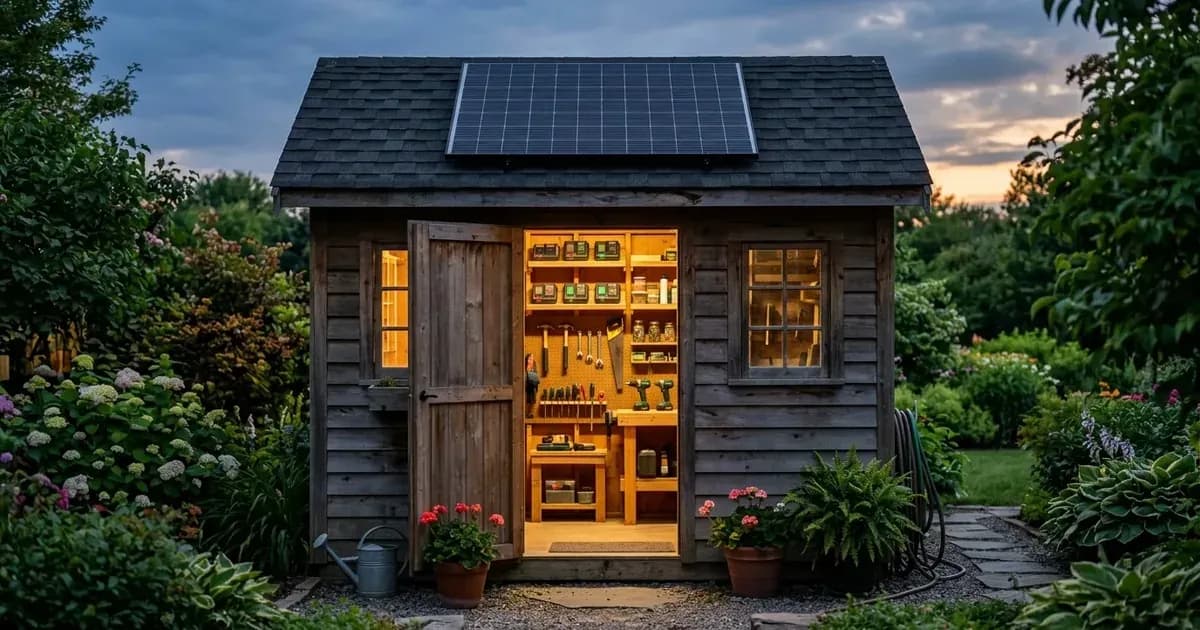
- The shed is solar's ideal first project: small loads, kit-sized budgets, and the trenching quote it replaces as its built-in business case.
- Sizing is a load list, not a formula: lights-and-chargers wants ~100W; the tool-charging workshop wants 200–400W and a small battery.
- It's off-grid design in miniature — same four boxes, garden scale, and the lessons transfer to everything bigger.
- The alternative it beats is specific: conduit across the yard — distance from the house decides the economics before anything else.
Why the shed case is so clean
Every big-solar anxiety shrinks to garden scale here. Loads are knowable — a shed's entire electrical life fits on an index card. Stakes are low — a sizing miss costs a second panel, not a redesign. Paperwork lightens — small off-grid systems skip the interconnection gauntlet entirely (detached-structure electrical rules still vary; one permit-office call settles your town). And the alternative is expensively concrete: running grid power to an outbuilding means trenching, conduit, and an electrician's day — a quote that makes a solar kit look like the frugal option, because across most yards it is.
It's also the best classroom in solar: the four-box off-grid architecture — panel, controller, battery, inverter — at a scale where mistakes teach cheaply and the kW-versus-kWh lesson becomes muscle memory.
Sizing from the load list
Shed life | Loads | The kit |
|---|---|---|
Garden shed | LED lights, phone/device charging | ~100W panel, small controller+battery — the starter tier |
Workshop |
| 200–400W, 1–2 kWh battery, small inverter |
Serious outbuilding |
| 400W+, surge-checked inverter — approaching cabin class |
The trap tier | Heaters, big compressors | Resistive heat's math says run the conduit after all |
Loads × hours per the standard budget method; the index card is the design document.
Two shed-specific notes: mount for the sun, not the shed — outbuildings rarely face ideally, and a small ground rack or orientation compromise costs little at this scale; and winter honesty — a north-shaded shed in December delivers the seasonal minimum, so workshop-in-January lives want the battery sized generously or expectations sized modestly.
Build notes from everyone's second attempt
Buy the kit rather than assembling firsts — matched components matter most exactly where experience is least. Spend the savings on the battery (LFP earns its keep even here) and on proper fusing — small systems burn sheds via the same skipped protection big ones never skip. Mount panels where an occasional rinse is easy. And leave controller headroom: every shed system grows — the lights beget the radio begets the fridge — and the second panel should bolt on, not start over.
The quiet payoff outlasts the shed: a season of watching that little system — the monitoring glance, the winter dip, the battery's moods — teaches the whole grammar of this site at garden stakes. Half the confident off-grid cabins in America started as somebody's shed.
Frequently asked questions
Can I put solar on my shed?
Yes — and it's often the best-fit solar project on the property: a small off-grid kit (panel, charge controller, battery, small inverter) powers lights, tools, and chargers without trenching grid power across the yard.
What size solar system does a shed need?
Budget the loads: LED lights and device charging want barely 100W of panel; adding power-tool charging and a small fridge pushes toward 200–400W with a 1–2 kWh battery. The load list, not the shed size, decides.
Do I need a permit for shed solar?
Small off-grid systems on your own outbuilding typically avoid the interconnection paperwork of grid-tied solar, but electrical permits vary by jurisdiction — detached-structure wiring rules apply in many. A permit-office call beats assumptions.
Is it cheaper than running power to the shed?
Frequently, decisively — trenching conduit across a yard is real money, while a shed-scale kit costs less and arrives in one box. Distance is the deciding variable.
References
- US DOE – Solar Photovoltaic Technology Basics — accessed 5 August 2026
Related guides
More from schemes, subsidies & financing.