GivEnergy All In One And Giv Gateway Setup Guide
Updated 15 September 2026 · By SolarNevs Research Desk, Dealer surveys + verified sources · 4 sources · Method ↗
Key Takeaways
- All electrical connections for the GivEnergy All-in-One and Giv-Gateway must follow certified wiring rules.
- Inverter systems require mounting on non-combustible vertical surfaces for safety.
- Grid protection settings must align with regional distribution codes.
- High-voltage DC, AC grid interconnection, and switchgear modifications are strictly for certified, licensed personnel.
Understanding GivEnergy All-in-One and Giv-Gateway Installation Requirements
Installing a GivEnergy All-in-One battery storage system and its accompanying Giv-Gateway involves specific safety and electrical compliance requirements. These systems integrate battery storage with grid connection, requiring careful attention to established standards. The primary focus for any installation is safety and adherence to certified electrical practices.
What is actually going on
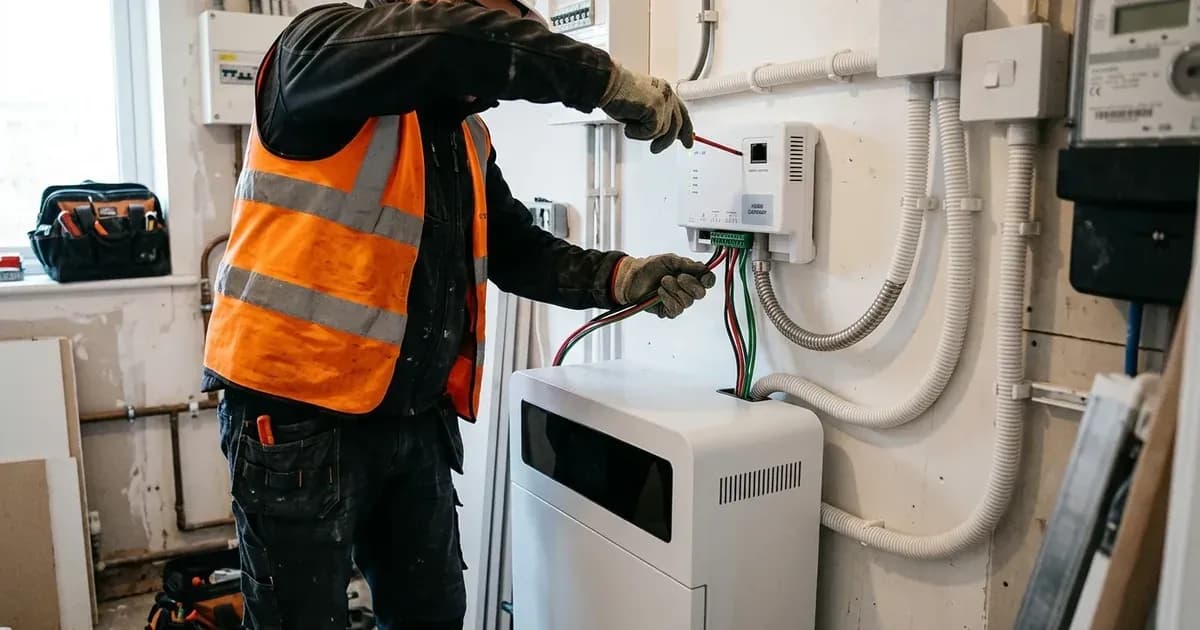
A GivEnergy All-in-One system combines an inverter with battery storage, managing energy flow between solar panels, the battery, and the home's electrical supply. The Giv-Gateway acts as an automatic backup switch, enabling whole-home backup in the event of a grid power cut. The installation process connects these components to the property's electrical system and the national grid. This involves handling both direct current (DC) from solar panels and batteries, and alternating current (AC) for household use and grid interaction.
System Component / Stage | Functional Role | Installation & Compliance Requirement |
|---|---|---|
GivEnergy All-in-One | Integrated inverter and battery storage unit | Must be mounted on a non-combustible vertical surface with adequate ventilation |
Giv-Gateway | Automatic whole-home backup switchgear | Integrated into main electrical supply and switchboard by certified personnel |
Grid Interface | Directs solar DC, battery DC, and AC grid power | Configured to align with regional distribution grid protection codes |
System Servicing | Electrical isolation and maintenance | Isolate PV, battery, and AC breakers; wait capacitor discharge time |
The installation of such systems is not a DIY task. It requires specialised knowledge and certification due to the high voltages and currents involved, as well as the need to comply with specific grid connection regulations.
The installation process: Key considerations
The installation of a GivEnergy All-in-One and Giv-Gateway system follows a structured process, ensuring safety and compliance at each stage.
- Site Assessment and Preparation: Before installation begins, a thorough site assessment is carried out by a certified professional. This includes checking the structural integrity of mounting surfaces and ensuring adequate ventilation.
- Mounting the Inverter System: The GivEnergy All-in-One inverter system must be mounted on non-combustible vertical surfaces. This is a critical safety requirement to prevent fire hazards.
- Electrical Connections: All AC and DC electrical connections must follow certified wiring rules. This includes the wiring between the solar panels, the All-in-One unit, the Giv-Gateway, and the main distribution board. High-voltage DC and AC grid interconnection work requires specific expertise.
- Giv-Gateway Integration: The Giv-Gateway is integrated into the property's main electrical supply. This involves modifications to the switchgear to enable automatic backup functionality.
- Grid Protection Settings: The system's grid protection settings must match regional distribution codes. These settings ensure that the system operates safely and does not negatively impact the stability of the local electricity network.
- Commissioning and Testing: Once physically installed and wired, the system undergoes a commissioning process. This involves configuring the system, testing its functionality, and verifying that all components are operating correctly and safely.
What you can check yourself, and what you cannot
As a homeowner, you can prepare the installation site by ensuring clear access and confirming that the proposed mounting locations meet the non-combustible surface requirement. You can also familiarise yourself with the system's operation and monitoring once it has been safely commissioned.
However, all high-voltage DC, AC grid interconnection, and switchgear modifications must be performed by certified, licensed personnel. Attempting these tasks yourself is extremely dangerous and can lead to severe injury, electrical fires, or damage to the equipment. It will also invalidate warranties and may breach local electrical regulations.
Safety Warning: Tightening or disconnecting terminals, or opening the unit, must only be done after isolating PV, battery, and AC breakers, and waiting the manual's capacitor discharge time. Opening the unit is authorised-service work.
What the published sources do not tell you
While general installation requirements are clear, specific technical details such as exact cable gauges, torque settings for terminals, or precise dimensions for mounting brackets are typically found within the manufacturer's detailed installation manuals. These documents are usually provided to certified installers and are not always publicly available.
Furthermore, regional distribution codes for grid protection settings can vary by network operator and specific location within Great Britain. These codes are dynamic and require an accredited installer to access and apply the most current local requirements. The specific communication protocols for smart meter integration (such as LoRa wireless and wired Ethernet) are part of the system's design but their detailed implementation is handled by the installer during setup.
Still showing the fault? Book a technician
If the steps above did not clear it, tell us the inverter or battery and the exact code. We pass it to a technician who covers your city; visit charges are quoted before they come.
How this pays for the site: the technician or verifier pays SolarNevs a fixed introduction fee. Nobody pays to be recommended, and you are free to use our free guides instead.
Frequently asked questions
What are the primary technical requirements for givenergy all in one and giv gateway setup guide?
Key requirements include compliance with local grid codes, correct equipment certification, and proper electrical isolation.
Who is authorized to install and inspect givenergy all in one and giv gateway setup guide?
All high-voltage DC, AC grid tie-in, and switchboard modifications must be performed by a qualified, accredited electrical professional.
How is export power limited in givenergy all in one and giv gateway setup guide?
Export limiting is achieved using certified bidirectional smart meters or power sensors providing dynamic feedback to the inverter system.
References
- GivEnergy All in One 2 + MPPT product manual - vertical non-flammable wall mounting, clearances, isolation and shutdown sequence — accessed 6 September 2026
- GivEnergy Gateway product page - whole-home backup switching during a grid outage — accessed 6 September 2026
- K-Electric Requirements for Distributed Generation Interconnection - inverter voltage and frequency trip ranges, islanding protection and accepted inverter standards — accessed 6 September 2026
- NEPRA (Prosumer) Regulations 2026, S.R.O. 251(I)/2026 - Pakistan rules for consumer generation and export to the distribution network — accessed 6 September 2026
Related guides
More from inverter errors & fixes.